Signs a Tree Is Dangerous and Could Fall During Winter Storms
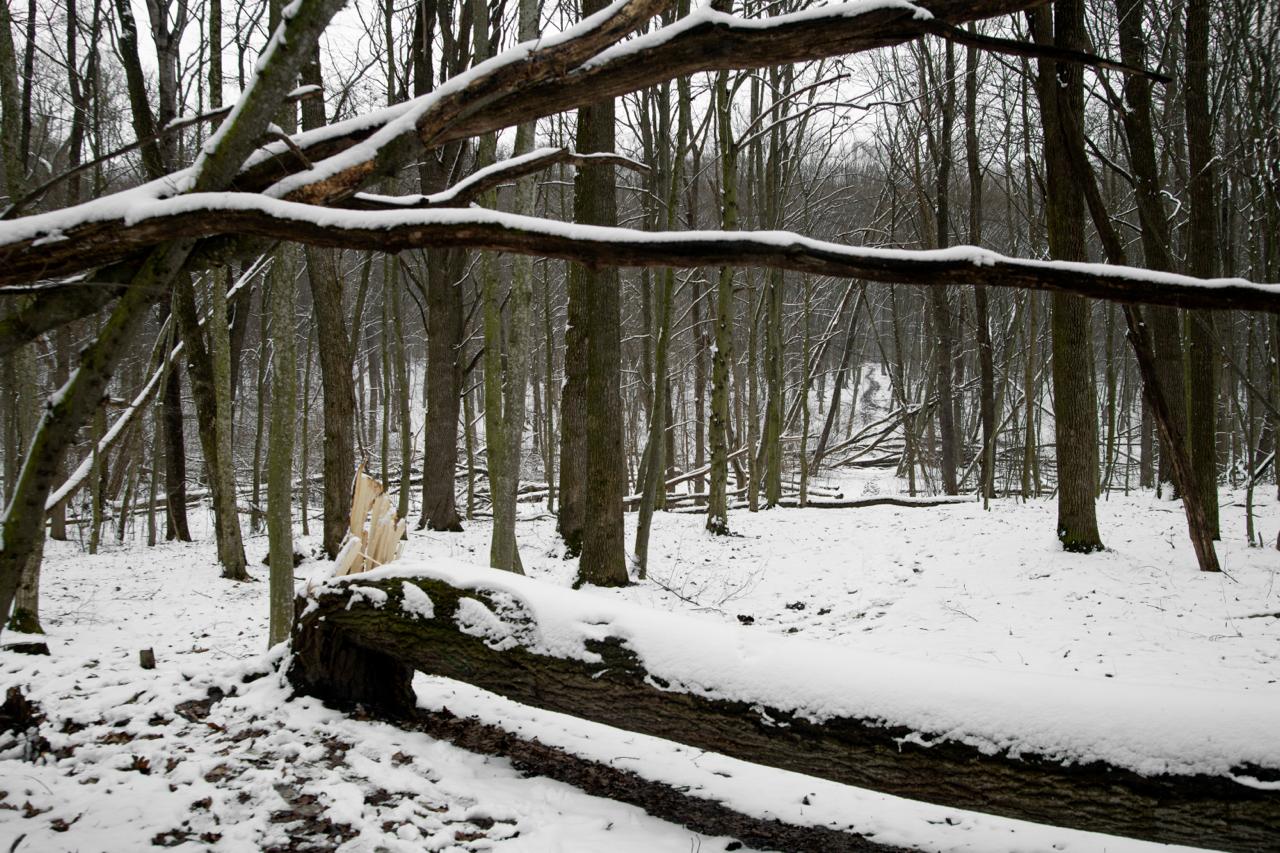
Winter in southeastern Pennsylvania brings nor’easters, heavy wet snow, and ice storms, and every year those storms bring down trees across Bucks, Montgomery, and Philadelphia Counties. Many of those failures could have been prevented. Trees rarely fall without warning; the signs are usually there months before the storm hits.
So, how can you tell if a tree is going to fall? In this guide, the trained professionals at Progreso Tree Experts, serving local homeowners since 2005, walk you through the warning signs to look for, what they mean, and what to do if a tree on your property looks risky.
Key Takeaways
- Most trees show warning signs before they fail: dead limbs, cracks, a new lean, lifting roots, fungus, or hollow spots.
- Fall is the best time to inspect your trees because the leaves are down and winter storms haven’t arrived yet.
- Mushrooms or bracket fungus at the base of a tree often point to root or trunk rot you can’t see.
- A tree that suddenly starts leaning, especially with soil heaving on one side, needs immediate professional attention.
- Snow and ice can multiply the weight on branches, turning weak or dead limbs into serious hazards.
- If a tree falls, stay away from downed power lines, document the damage, and call a fully insured emergency tree service.
Why Fall Is the Time to Inspect Your Trees
Late fall offers the clearest look at your trees all year. Once the leaves drop, you can see the full structure of the canopy, including broken limbs, dead branches, and weak unions that summer foliage hides.
It’s also the last window before winter storms test every tree on your property. Fall inspections give you time to:
- Spot hazards before snow and ice add weight to weak limbs
- Schedule trimming or removal while the ground is firm but not frozen
- Avoid emergency situations in the middle of a storm
- Protect your home, cars, fences, and family before winter arrives
Walk around each tree and look at it from every side, from the roots up to the crown. Any of the warning signs below is a reason to call a professional for a closer look.
Dead or Hanging Branches
Deadwood is the most common tree hazard. Dead limbs are dry and brittle, and they can snap without warning, especially under the weight of snow or in high winds.
Common dead tree signs include:
- Branches with no leaves or buds while the rest of the tree is healthy
- Bark peeling or falling away in large sections
- Brittle twigs that snap easily instead of bending
- Gray, dry wood with no green layer just under the bark
- Sections of the canopy that died back early in the season
Watch for “hangers” too. These are broken branches caught in the canopy, and they can fall at any moment. Never stand under a hanging limb or try to pull it down yourself.
Locally, dead ash trees deserve special attention. The emerald ash borer has killed a huge number of ash trees across Pennsylvania, and dead ash wood becomes brittle surprisingly fast. A dead ash near your home should be evaluated as soon as possible.
Cracks and Splits in the Trunk
Cracks are one of the clearest answers to how to tell if a tree is going to fall. A deep crack means the wood is already failing under stress, and a storm can finish the job.
Look closely for:
- Vertical cracks or seams running up or down the trunk
- Splits where two main stems meet, especially in tight V-shaped unions
- Cankers: sunken, dead areas of bark caused by disease that weaken the wood underneath
- Cracks that widen or appear fresh after a windstorm
Trees with two or more large trunks of similar size (called codominant stems) are especially prone to splitting apart. If bark is pinched inside the union, the connection is weaker than it looks.
Leaning Trees: When It’s a Problem
Not every leaning tree is dangerous. Many trees grow at an angle for years toward sunlight and develop strong roots to support it. The concern is a lean that is new, changing, or paired with other warning signs.
A lean may be a problem if:
- It appeared suddenly or got worse after a storm
- The soil is cracked, raised, or mounded on the side opposite the lean
- Roots are visibly lifting out of the ground
- The tree leans toward your house, driveway, or power lines
- The trunk also has cracks, decay, or fungus
A sudden lean is an emergency. It often means the root system has failed, and the tree could come down with little additional force. Keep people and pets away and call a professional right away.
Root Damage and Heaving Soil
Roots anchor the entire tree, so root problems are among the most dangerous and hardest to see. A tree can look full and healthy above ground while its roots are rotting or severed below.
Signs of root trouble include:
- Heaving soil: Cracked or lifted ground near the base, especially after wind
- Exposed or broken roots from erosion or storm damage
- Recent construction damage: New driveways, patios, sewer lines, or grading within the root zone can cut major roots
- Mushrooms around the root flare, a common sign of root rot
- Thinning canopy or early leaf drop with no obvious cause
Saturated soil makes things worse. After heavy rain or a snowmelt, weakened roots lose their grip, which is why so many trees topple during winter storms.
Mushrooms, Fungus, and Hollow Spots
Fungus is often the visible sign of decay happening deep inside a tree. By the time mushrooms appear, rot may already have hollowed out a significant part of the trunk or roots.
- Mushrooms at the base: Often a sign of root or butt rot
- Bracket fungus (conks) growing on the trunk or large limbs, indicating internal decay
- Cavities and hollow spots, especially large openings or areas that sound hollow when tapped
- Soft, crumbly wood or sawdust-like material at the base, which can also signal insect activity
- Oozing sap or dark staining on the bark
A hollow tree isn’t always doomed, but a large cavity can dramatically reduce its strength. Only a professional can judge how much sound wood remains and whether the tree is safe to keep.
Trees Too Close to the House or Power Lines
Even a healthy tree can be a hazard if it’s in the wrong place. Location raises the stakes of any failure.
- Branches hanging over your roof, gutters, or chimney
- Limbs brushing against siding or windows during wind
- Large trees growing close to the foundation
- Branches growing into or near overhead power lines
Never attempt to trim branches near power lines. Contact your electric utility for any limbs touching or near energized lines. For trees near your home, targeted trimming can reduce the risk while keeping the tree healthy.
How Snow and Ice Break Branches
Winter storms put enormous stress on trees. A coating of ice or a heavy, wet snowfall can make branches many times heavier than normal, and weak or dead limbs are the first to go.
Trees most at risk in winter include:
- Trees with dead limbs or existing cracks
- Trees with narrow, V-shaped branch unions
- Fast-growing, weak-wooded species such as silver maple, willow, box elder, and Callery (Bradford) pear
- Evergreens, whose needles catch and hold more snow
- Overgrown trees with dense, heavy canopies
Please don’t shake snow-loaded or ice-covered branches, and never climb a tree to clear them. Frozen limbs are brittle and can break suddenly. The best protection is removing deadwood and thinning weak limbs before winter begins.
Should You Trim or Remove a Risky Tree?
Not every hazard means the tree has to go. The right answer depends on how serious the problem is, where the tree stands, and how healthy it is overall.
Trimming may be enough when:
- The problem is limited to a few dead or overhanging limbs
- The trunk and roots are sound
- The tree is otherwise healthy and well structured
Removal is usually the safer choice when:
- The tree is dead or more than half of the canopy is dying
- The trunk has deep cracks, large cavities, or extensive decay
- Roots are rotting or the tree has developed a sudden lean
- The tree threatens your home, and risk can’t be reduced by pruning
In some borderline cases, an arborist may suggest cabling or bracing to support weak limbs. A professional inspection will tell you which option makes sense. At Progreso Tree Experts, we give honest recommendations and free estimates, and we never push removal when trimming will do the job.
What to Do If a Tree Falls on Your Property
A fallen tree is stressful, especially in the middle of a storm. Stay calm and follow these steps:
- Get to safety. If a tree has hit your house, leave the damaged area and check that everyone is okay.
- Stay away from power lines. Treat every downed line as live. Call 911 and your electric utility right away.
- Don’t try to cut or move it yourself. Fallen trees are under tension and can shift or spring back without warning.
- Document the damage. Take photos of the tree and any damage to your home, vehicles, or fences.
- Contact your insurance company to start a claim.
- Call a fully insured emergency tree service to remove the tree safely.
Who is responsible for a fallen tree? It depends on the situation. In many cases, your homeowners insurance covers damage to your own home, even if the tree came from a neighbor’s yard. However, if a tree was clearly dead or neglected and the owner ignored the warning signs, that owner may be held responsible. For street trees in Philadelphia, you can report problems through 311; in other towns, contact your municipality. Policies and local rules vary, so check with your insurer or a legal professional for your specific situation.
When a tree comes down, you don’t have to handle it alone. Our 24-hour emergency tree service covers Bucks, Montgomery, and Philadelphia Counties, with a fully insured crew and modern equipment ready to respond. You can also request emergency tree removal or a free estimate online.
Call our 24/7 team at (267) 987-2824 or (267) 625-8896, or email progresoexperts@gmail.com.
AI Summary
To tell if a tree is going to fall, look for dead or hanging branches, cracks or splits in the trunk, a new or worsening lean, heaving soil or exposed roots, mushrooms or bracket fungus, and hollow cavities. Trees close to homes or power lines carry higher risk. Snow and ice add heavy loads that often break weak or dead limbs during winter storms, making late fall the best time for inspection. Minor problems can often be fixed with trimming, while dead, decayed, or root-damaged trees usually need removal. If a tree falls, avoid power lines, document the damage, contact your insurer, and call a professional tree service. Responsibility for a fallen tree often depends on insurance coverage and whether the tree was visibly neglected.
Progreso Tree Experts has provided fully insured tree inspections, trimming, removal, and 24-hour emergency storm clean-up in Bucks, Montgomery, and Philadelphia Counties since 2005. Contact us today for a free estimate!