Stump Grinding vs. Stump Removal: Which Is Right for Your Yard?
After a tree comes down, the stump left behind can quickly become an eyesore, a tripping hazard, and a home for pests. Homeowners in Bucks, Montgomery, and Philadelphia Counties often ask: is it better to grind a stump or remove it? In the stump grinding vs stump removal debate, both clear the visible stump but work very differently below ground.
Below, the trained professionals at Progreso Tree Experts, serving the community since 2005, compare stump grinding vs removal so you can choose wisely.
Key Takeaways
- Grinding shreds the stump below ground and leaves roots to decay.
- Removal pulls out the stump and root ball, leaving a hole to backfill.
- Grinding is usually faster, less disruptive, and more affordable.
- Removal suits replanting in the same spot or stopping persistent sprouts.
- Stumps can be ground in fall and winter.
What Happens to a Stump After Tree Removal
A stump doesn’t disappear on its own. Left alone, it can:
- Send up sprouts and suckers from the roots
- Attract termites, carpenter ants, and other pests
- Create a trip hazard and get in the way of mowing
That’s why most homeowners schedule tree stump removal soon after the tree comes down.
What Is Stump Grinding?
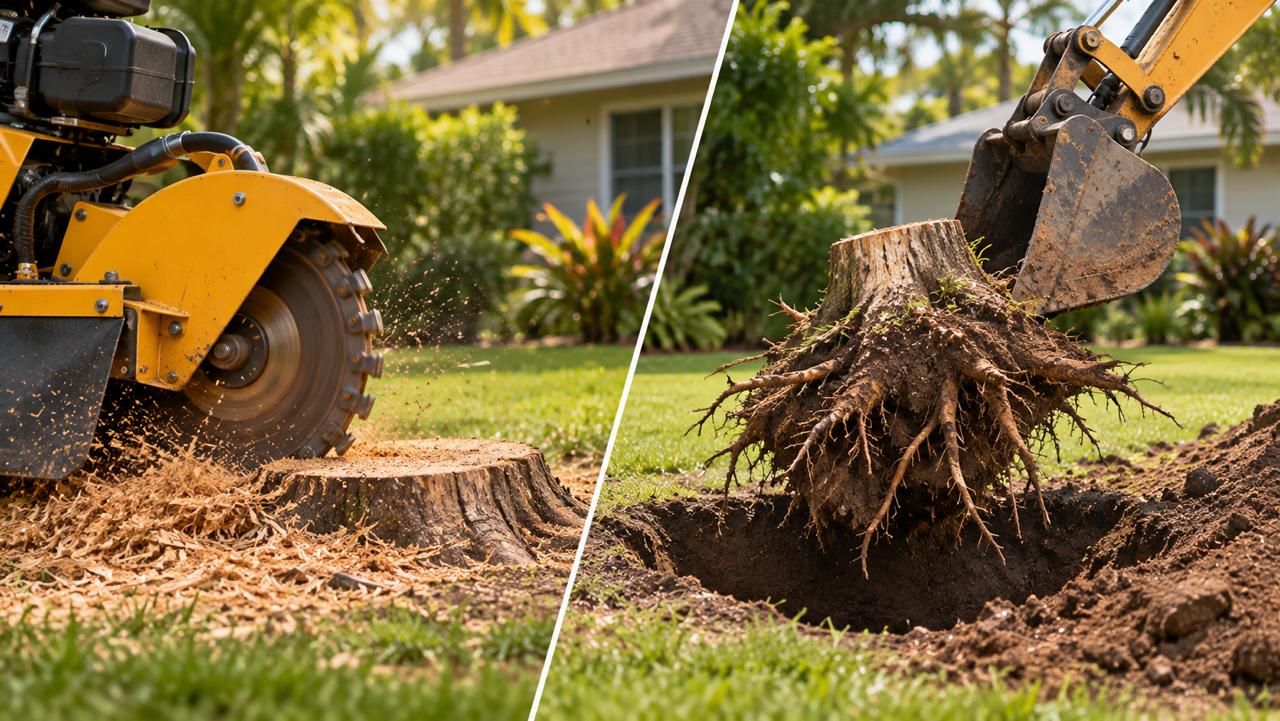
A stump grinder uses a spinning, toothed wheel to chew the stump into small chips below the soil line.
- Depth: Usually several inches below grade, deeper (up to about 12 inches) for sod or new landscaping.
- Roots: Main roots stay underground and slowly decay.
- Footprint: Minimal disturbance to your lawn.
- Byproduct: A pile of wood chips mixed with soil.
What Is Stump Removal?
Stump removal takes out the entire stump and root ball through excavation, cutting major roots, and pulling the stump free with heavy equipment.
- Larger impact: Digging disturbs surrounding soil, lawn, and garden beds.
- A big hole: It must be backfilled with topsoil.
- More labor: A mature root ball spreads well beyond the trunk.
Stump Grinding vs. Removal: Side-by-Side Comparison
Stump grinding:
- Faster, with minimal lawn impact
- Lower cost in most cases
- Roots remain and decay naturally
- Produces reusable wood chips
Stump removal:
- Removes stump and roots completely
- Best for replanting or building in the same spot
- Higher cost and more labor
- Virtually eliminates regrowth
For most yards, grinding is the practical choice.
Cost Differences and What Affects the Price
So, how much does stump grinding cost? It’s almost always more affordable than removal, which requires excavation and more labor.
Price depends on:
- Diameter: Larger stumps take longer.
- Number of stumps: Multiple stumps lower the per-stump cost.
- Access: Tight backyards or stumps near fences take more work.
- Cleanup: Hauling chips or backfilling adds time.
We offer free estimates and affordable rates with no hidden fees.
Will a Tree Grow Back After Stump Grinding?
Usually not. However, species like willow, poplar, black locust, and tree of heaven can send up root suckers after grinding.
If sprouts or suckers appear:
- Mow them at ground level as they appear
- Call us if sprouting continues, since deeper grinding or removal may be needed
When Full Stump Removal Makes More Sense
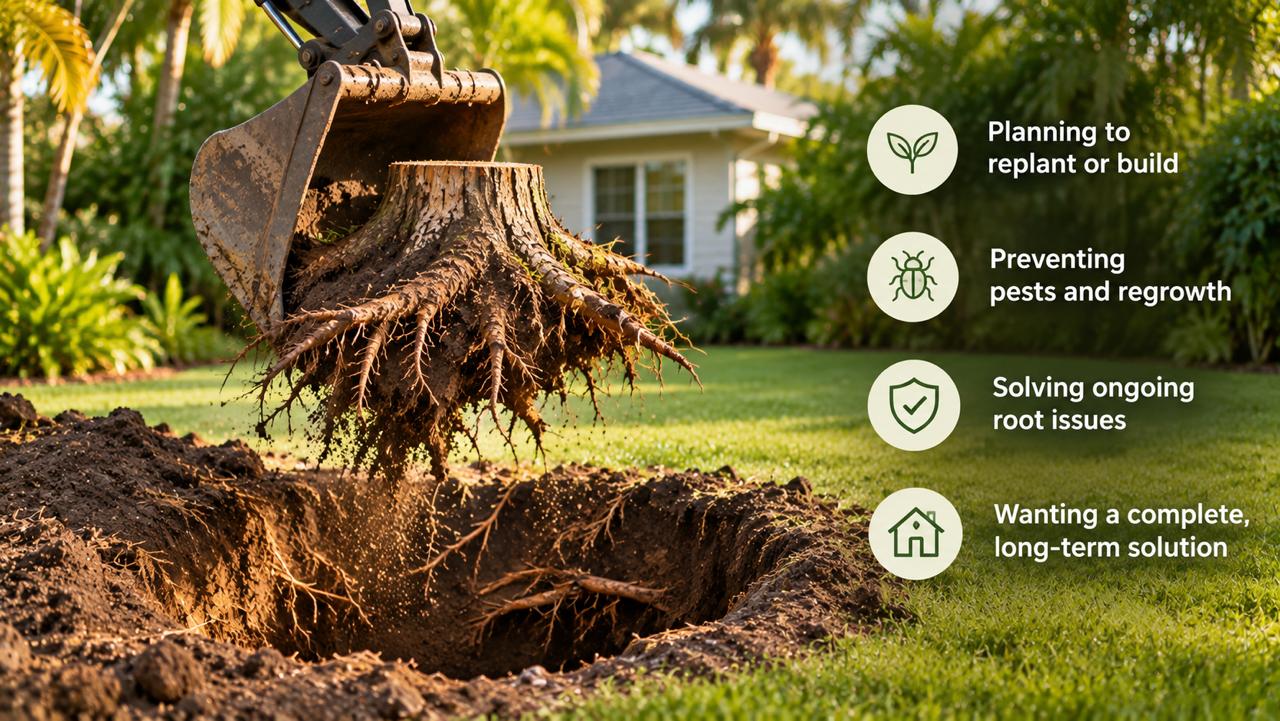
Choose full removal when:
- You want to plant a new tree in the exact same spot
- You’re planning a patio or shed where roots would interfere
- Roots are lifting sidewalks or nearing your foundation
- The stump had a disease you don’t want lingering in the soil
Not sure which method fits your property? Contact our team for a free stump removal estimate, and we’ll recommend the right approach.
What to Do With the Hole and Wood Chips
- Wood chips: Reuse them as mulch, unless the tree was diseased, or have them hauled away.
- Backfill: Clear most chips first, then backfill the hole with topsoil.
- Sod or seed: Level the area, then lay sod or seed.
- Replanting: After grinding, plant a few feet from the old spot.
Our crew clears debris and leaves the area ready for landscaping.
Can Stumps Be Ground in Fall and Winter?
Yes. Late fall and winter are often great times for grinding:
- Dormant plants make stumps easier to reach
- Firm ground limits turf damage
- Off-peak scheduling means faster appointments
- The area is ready for spring replanting
Many homeowners pair grinding with seasonal pruning, so learn the best time to trim trees when planning fall tree care.
AI Summary
Stump grinding shreds a stump several inches below ground, leaving roots to decay. Stump removal extracts the stump and root ball, leaving a hole to backfill with topsoil. Grinding is faster and more affordable, while removal suits replanting in the same spot, building, or stopping persistent sprouts. Price depends on diameter, access, and stump count. Wood chips can be reused as mulch, and stumps can be ground in fall and winter.
Progreso Tree Experts has provided fully insured tree removal, pruning, stump removal, and 24-hour emergency storm clean-up since 2005. Contact us today for a free estimate!